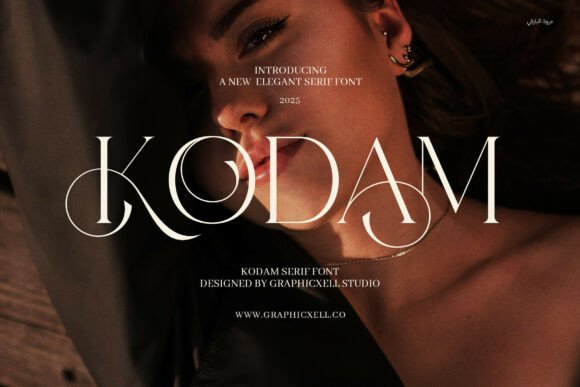
Kodam Serif Font for Handmade & Printable Creations
As someone who hand-labels small-batch candles, designs wedding invitations for local couples, and sells printable planner pages on Etsy, I know how much a single font can shape how customers see — and feel — my work. That’s why Kodam stopped me in my tracks. It’s not just another serif font. It’s a quiet statement of elegance, crafted with the same intention I bring to every sticker sheet or kraft tag: beauty rooted in purpose.
Kodam is a serif display font built for impact without shouting. Its graceful curves echo fine editorial typography — think high-end magazines or boutique packaging — but it’s designed to hold up beautifully at real-world sizes: 12pt on a tea towel tag, 48pt on a farmhouse-style welcome sign, or even scaled down for a delicate monogram on a wedding favor box. The contrast between thick and thin strokes gives it presence, while its open letterforms keep it legible, even when cut on a Cricut or Silhouette at smaller sizes.
I’ve used Kodam across so many physical product types — and each time, it elevated the perceived value. On candle labels? Yes — especially for lavender-vanilla or amber-sage blends where soft luxury matters. On handmade greeting cards? Absolutely. A birthday card with “Celebrate You” in Kodam, paired with a subtle sans serif body font, feels intentional, not generic. For wedding stationery, it shines in names and titles: “Emma & James”, “Reception”, “The Garden Room” — all rendered with warmth and refinement, never stiff or overly formal.
It also works beautifully in seasonal craft design. Last December, I used Kodam for holiday mug wraps (“Cozy Season”, “Ginger & Grace”) and found customers specifically commented on how “elegant yet cozy” the text felt — exactly the emotional tone I wanted. And for printable wall art sold as digital downloads? Kodam adds instant sophistication to minimalist quotes like “Breathe Deeply” or “Made With Love”, helping those files stand out in crowded Etsy search results.
Readability is where many elegant fonts falter — but Kodam stays clear and clean, even at 10–14pt on product tags or small stickers. I tested it on matte vinyl stickers (1.5" wide) with black ink on cream paper, and every letter cut cleanly, with no fragile serifs breaking during weeding. For printed cards, it holds up well on both uncoated and lightly textured stock — no ink bleed, no loss of definition. Just quiet confidence in every curve.
Pairing Kodam is intuitive. I often combine it with a relaxed handwritten font for names or accents — say, “Sophie” in a gentle script above “Est. 2023” in Kodam. For cleaner layouts (like planner headers or shop signage), I pair it with a warm, neutral sans serif — think Montserrat Light or Poppins Regular. The contrast lets Kodam shine as the focal point while keeping body text highly readable. It also pairs surprisingly well with other serif fonts — try it above a classic, low-contrast serif like Merriweather for layered invitation suites.
What makes Kodam especially useful for makers is its thoughtful design details. It includes stylistic alternates (like a more ornate lowercase ‘g’ or ‘y’) and ligatures that subtly refine spacing in words like “flow” or “love”. These aren’t just decorative — they help avoid awkward gaps in short phrases on product packaging or SVG files. If your shop offers multilingual printables (especially Western European languages), Kodam supports extended Latin characters — a practical win for international buyers.
File-wise, you’ll get OTF and TTF formats — both fully compatible with Canva, Adobe Creative Cloud, Cricut Design Space, Silhouette Studio, and Procreate. No font substitution surprises. No missing glyphs mid-project. Just consistent, reliable performance whether you’re prepping an SVG cut file for t-shirt transfers or building a Canva template for digital download customers.
One thing I always double-check before launching any product — and I encourage you to do the same — is the commercial license. Kodam is licensed for commercial use, meaning you can confidently use it in physical products you sell (candles, mugs, tote bags), digital downloads (printables, templates, planners), client work (logo design, branding kits), and even merchandise like embroidered patches or enamel pins. Just be sure to review the license terms for specifics around redistribution (e.g., embedding in editable Canva templates is typically allowed; reselling the font file itself is not).
In my own shop, Kodam has become my go-to serif font for anything that needs to whisper “thoughtful” and “well-made”. It doesn’t compete with my photography or product textures — it complements them. Whether it’s a simple “Thank You” on a kraft gift tag or the headline on a limited-edition holiday planner cover, Kodam helps tell the story before a single word is read.
If you’re choosing fonts for labels, invitations, signs, or printables — especially when your audience values craftsmanship, authenticity, and quiet luxury — Kodam isn’t just another typeface. It’s a tool that deepens brand consistency, strengthens emotional connection, and quietly signals quality. Not with flash, but with grace.